Padel backcourt position is one of the first tactical concepts beginners need to understand, since standing in the wrong spot at the back of the court leads to constant scrambling and easy points for opponents. Unlike the net, where positioning is fairly intuitive, the backcourt has its own set of rules about depth, spacing, and when to move forward that take a little more explanation to get right.
This guide covers where beginners should stand in the backcourt, how positioning shifts during a point, and the common mistakes that leave players out of position when it matters most.
What Counts as the Backcourt in Padel
The backcourt generally refers to the area between the service line and the back wall, where players spend most of their time during the early stages of a point, especially right after serving or returning. It's the default starting position for most points before a team has the chance to move forward and take over the net.
How the Enclosed Court Affects Backcourt Play
Padel's back glass and side fencing directly shape how backcourt positioning works, since the walls let the ball stay in play well past where it would go out in tennis. Standing too close to the glass leaves no room to track a ball that rebounds unpredictably, which is why proper backcourt depth is closely tied to how comfortable you are reading wall bounces in the first place.
Why Backcourt Position Matters So Much
Good backcourt positioning gives you the time and space to read incoming shots, including tricky bounces off the back glass, without being caught flat-footed. Standing too close to the back wall or too far forward both create problems: one leaves no room to handle deep shots, the other leaves you exposed to lobs and drop shots you can't reach in time.
Where Beginners Should Stand
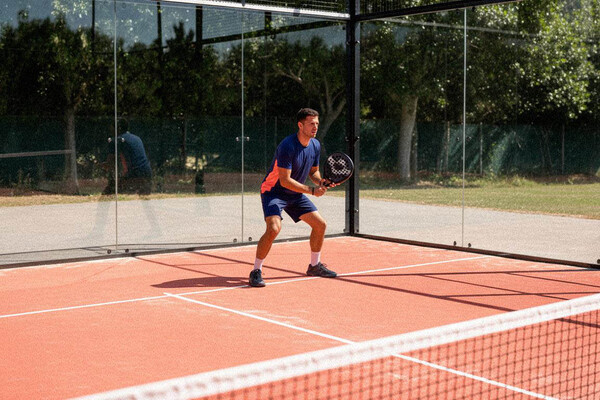
A good general starting point is roughly one to two steps behind the service line, close enough to react to shorter shots but with enough room behind you to handle a ball that bounces deep or comes off the back wall. This isn't a fixed spot. It shifts constantly based on what's happening in the point, but it's a solid default to return to whenever you're unsure.
Depth: How Far Back to Stand
Standing too close to the back wall leaves almost no time to react to shots that bounce and come toward you fast, since you have nowhere to retreat. Standing too far forward, closer to the service line, leaves you vulnerable to lobs sailing over your head. The right depth usually sits somewhere in between, adjusted based on your opponents' typical shot selection and pace.
Width: Covering Your Half of the Court
Each player in the backcourt is generally responsible for their own half of the court, roughly split down the middle, with some flexibility depending on where the ball is and how your partner is positioned. Drifting too far toward the center leaves your own side exposed, while staying too rigidly on the outside can open gaps down the middle.
| Position | Risk | Better Approach |
|---|---|---|
| Too close to back wall | No room to react to fast, deep shots | Stand 1-2 steps in front of the wall |
| Too close to service line | Vulnerable to lobs over your head | Give yourself room to move back for lobs |
| Drifting toward the middle | Leaves your side of the court open | Stay roughly aligned with your half |
| Standing flat-footed | Slow reaction to any direction change | Stay light, ready to move any direction |
How Backcourt Position Shifts During a Point
Positioning in padel isn't static. It changes constantly based on where the ball is and what your team is trying to do. Recognizing these shifts and adjusting quickly is a big part of what separates comfortable intermediate players from beginners who stand in one spot regardless of the situation.
After Serving or Returning
Right after the serve or return, most players are still in the backcourt, since it takes a shot or two to create an opportunity to move forward. This is the default starting position for the vast majority of points.
When Defending a Lob
If your opponents lob the ball deep, you'll often need to retreat further toward the back wall to let the ball bounce and track it properly, rather than trying to take it out of the air. Recognizing a lob early and adjusting your depth immediately prevents a rushed, awkward shot.
When an Opportunity to Advance Appears
A short or weak shot from your opponents is often the cue to move forward and look to take over the net, rather than staying planted in the backcourt out of habit. Recognizing these moments and moving decisively, together with your partner, is a core part of padel tactics beyond just backcourt positioning itself.
Common Mistakes With Backcourt Positioning
A few positioning habits show up again and again among beginners, and each one has a straightforward fix once you know what to look for.
Standing Too Deep Out of Habit
Some beginners default to standing very close to the back wall because it feels safer, but this actually makes it harder to handle fast, low shots that arrive before you can react. A bit more room in front of you usually helps more than it hurts.
Not Adjusting for Lobs
Failing to recognize a lob early and retreat in time often leads to a rushed swing or a ball sailing over your head entirely. Reading your opponents' setup and reacting to the shot as early as possible makes a big difference here.
Drifting Away From Your Half
Following the ball too literally, rather than maintaining rough coverage of your side of the court, can leave gaps your opponents will eventually find and exploit. Stay aware of your general positioning relative to your partner, not just the ball.
Missing Chances to Move Forward
Staying in the backcourt even when an opponent's shot creates a clear opportunity to advance wastes a chance to take over the more advantageous net position. Backcourt position is a starting point, not a place to camp out for the entire point.
Practicing Backcourt Positioning
A simple way to build better positioning habits is to have a partner or coach hit a mix of deep shots, lobs, and short balls while you focus purely on adjusting your depth and width correctly, without worrying about winning the point outright. This lets you build the instinct for reading and reacting to different shot types before adding the pressure of a competitive point.
Backcourt Position and Communication With Your Partner
Since padel is played in pairs, backcourt positioning depends on staying aware of where your partner is standing, not just your own spot. If both players drift toward the same side chasing the ball, the opposite side of the court opens up completely. A quick glance or a short call to confirm coverage helps keep the backcourt balanced as a team rather than as two players reacting independently.
Backcourt Position Quick Checklist
- Default to standing 1-2 steps behind the service line as your starting position.
- Give yourself enough room behind you to handle deep, fast shots.
- Cover your own half of the court rather than drifting toward the center.
- Retreat further and adjust depth quickly when you spot an incoming lob.
- Look for opportunities to move forward rather than staying back out of habit.
- Stay light on your feet, ready to adjust in any direction.
Good backcourt positioning comes from having a solid default and adjusting quickly as the point develops, not from finding one perfect spot and staying there. Get comfortable with that constant small movement, and the backcourt stops feeling like a place you're stuck and starts feeling like a position you actively control.